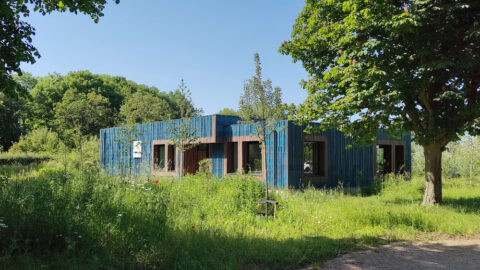
Environmental plans are like shrink-wrap around biobased homes and factory-built housing. That was the message from BAM executive Viviane Regout during a working visit by Queen Máxima and Housing Minister Boekholt-O’Sullivan to a biobased housing project in Doetinchem. Regout is also concerned about the ‘advisory’ role of municipal design review committees.
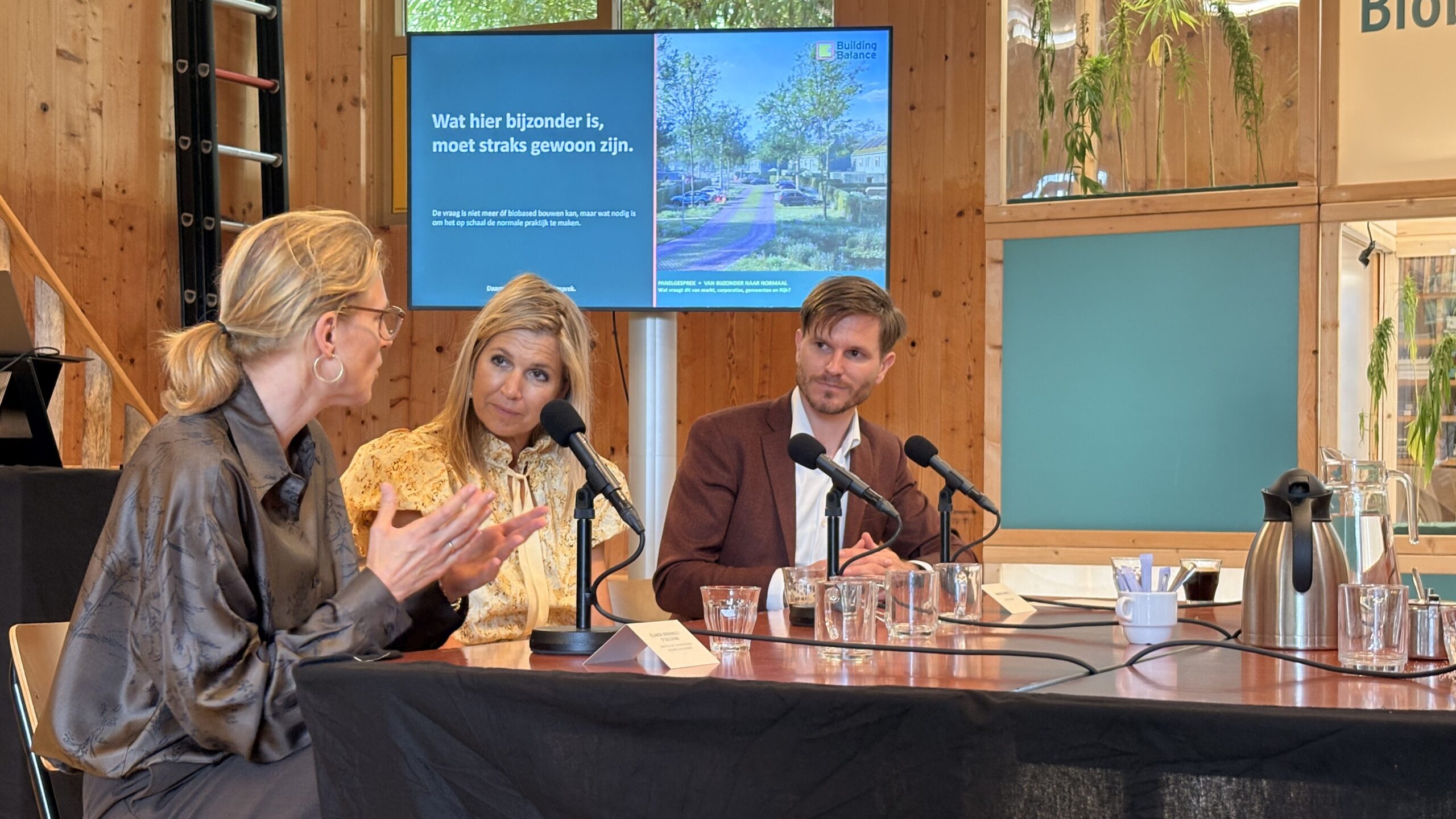
An hour earlier, she had been sitting on a tractor. After that came an extensive public tour of the Weidewald project, and now all eyes are on Queen Máxima during a Building Balance round-table discussion. The subject is the Achilles’ heel of biobased construction: the first seeds of a new construction culture have been planted, but how can its growth be accelerated?
Máxima is curious. “How many homes do you need to sell before the price becomes more attractive?” she asks inside a wooden school building in Doetinchem. She follows up with questions about BAM’s Flow timber factory-built home. “What obstacles still need to be overcome? And its energy performance is very good, isn’t it?” No, the Queen can hardly hide her enthusiasm for biobased construction.
Housing Minister Boekholt-O’Sullivan is somewhat more reserved. She too listens attentively, but as the person who actually has resources and policy instruments at her disposal, she is more restrained with both her questions and her enthusiasm for building with timber, hemp and flax. Her main objective is to build large numbers of homes and affordable ones, she emphasises.
The ‘from field to building’ generation
Does that mean the former senior Defence official has no interest in sustainable construction? Not at all. She is willing to support the ‘from field to building generation’, but Building Balance (and everyone else committed to biobased construction) needs to be more specific about what is needed and how government can help.
“Understandable,” Viviane Regout reflects shortly after the royal working visit organised by Building Balance. “The more concrete, the better. That’s what I always tell everyone around me as well.”
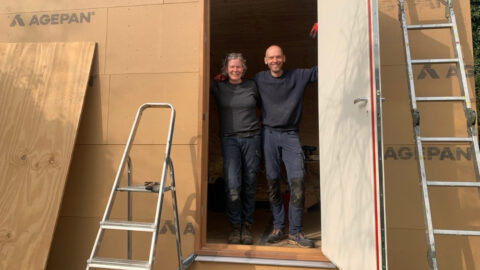
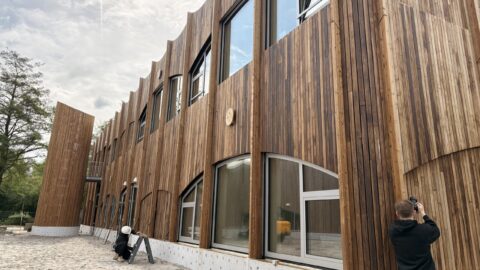
Regout is Executive Director at BAM Residential. She no longer needs convincing when it comes to building with timber. In fact, constructing timber, ground-based homes is at the heart of BAM’s strategy. Weidewald in Doetinchem is the fourth project where the company’s so-called Flow homes have been built.
“The end result is fantastic,” says the executive at the Netherlands’ largest construction company, “but getting there was quite a labour.”
‘Everything is different and that’s fantastic’
Rens Steintjes nods. He knows exactly what she means. As the alderman responsible for spatial planning in the municipality of Doetinchem, he was closely involved in this literally and figuratively green housing project.
“It was fantastic,” he says, looking back on the experience. “This project was completely different from what we were used to. Has it left us wanting more? Yes. At the Spoorzone development a little further away, which is much larger than this project, we would like to continue working in this way.”
Regout wants the same, but stresses that additional support from the minister would be welcome. She is calling for greater flexibility in environmental plans so that they provide more room for standardised housing concepts.
“At the moment, an environmental plan is like shrink-wrap. Builders and developers simply can’t work within it.”
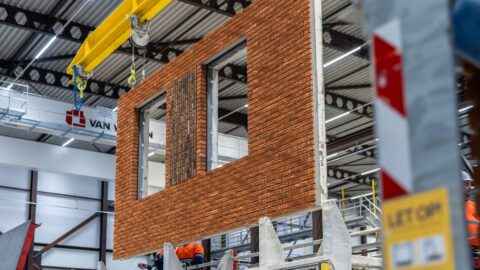
Industrialised builders are also frustrated by design review requirements, which they say differ from one municipality to another. As a result, factory-built homes, which work most efficiently with standard dimensions, have to be modified time and again. That costs time and money and creates frustration.
The design review debate
The minister does not see the same problem. “The design review committee only provides advice,” is her view. Regout responds: “That may be true. But I rarely see advice from a design review committee being set aside.”
The BAM executive is not alone in her criticism. Saar Veneman, Managing Director of housing association Sité Woondiensten, also believes that central government should do more to encourage biobased construction.
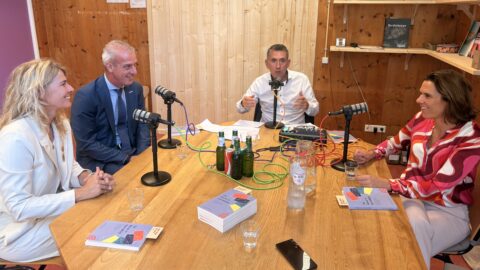
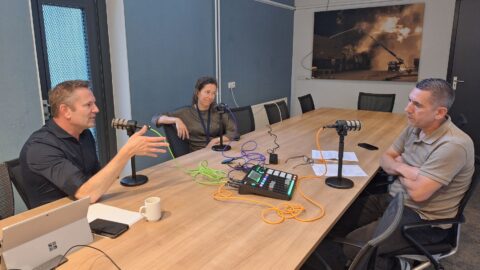
From left to right: Saar Veneman, Rens Steintjes, Thomas van Belzen and Viviane Regout during the recording of podcast Bureau Stoer.
Veneman manages 8,000 social rental homes. Over the next ten years, there are plans to build another 1,000. “How many of those will be biobased? We want to do it, but it depends on whether the conditions are attractive enough. I understand that the minister is focusing on numbers and affordability, but we must not lose sight of the quality of housing.”
Máxima: from concrete to timber
Back to Máxima. Can she give biobased construction a boost? Alderman Steintjes believes she can.
“Her Majesty has visited our municipality before. Today, I once again recognised the tremendous commitment and in-depth knowledge she brings and demonstrates to those around her. There is no doubt that this will help us gain more traction.”
BAM’s Regout agrees, because however appealing the concept may be, biobased construction will not take off by itself in 2026.
“Can Queen Máxima help biobased construction take flight? Her attention to this project is fantastic, and we desperately need it in the transition from brick and concrete to biobased construction,” the BAM executive concludes.
Interested in hearing the full debate? Listen to episode 45 of Bureau Stoer.

This article was published by Bouw en Installatie Hub. Would you like to stay up to date with the latest news from the construction and building services sectors? Then visit the Hub and sign up for the online community.
↗