Want to speed up housing construction? According to the Province of Gelderland, the solution does not start on the building site, but much earlier. The often slow-moving processes involved in area development, permitting and collaboration between municipalities, housing associations and private developers could operate far more efficiently.
With two new instruments—type approval for industrially produced homes and invitation planning—the province aims to help housing projects get off the ground more quickly. In some cases, the permitting process for factory-built homes could even be reduced from eight weeks to a single day.
For developers and contractors, that sounds like music to the ears. It is often during the early stages of projects that years are lost due to lengthy planning processes, changing municipal requirements and complex permitting procedures. Gelderland believes it has found a solution.
A building permit in one day
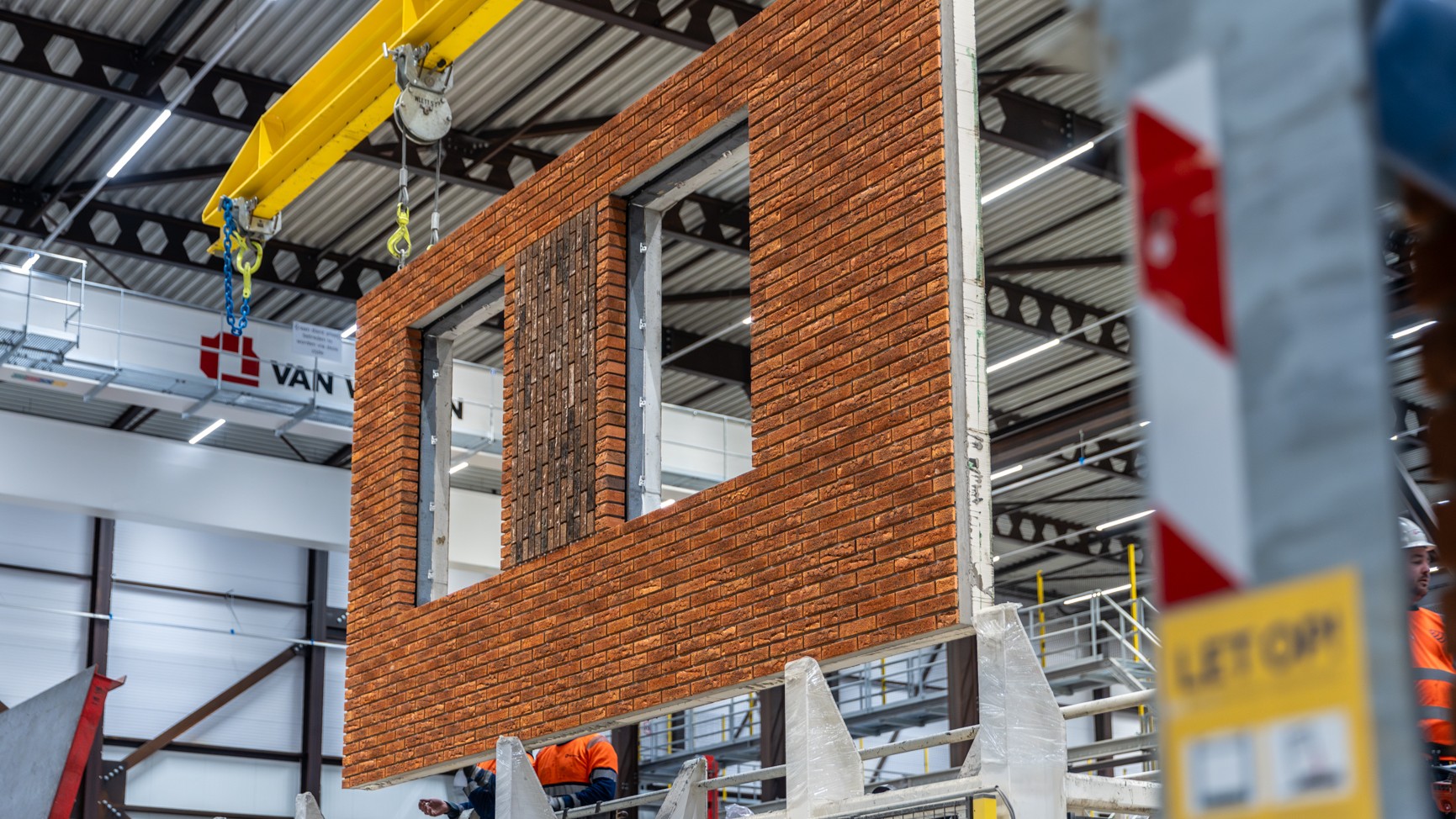
One of the key elements of the initiative is fast-track type approval for industrially manufactured homes. As part of a pilot programme run by the Arnhem–Nijmegen Green Metropolitan Region, homes produced in factories are being certified in advance, eliminating the need for each municipality to carry out a full technical assessment every time the same home is proposed for a project.
“You can compare it to a car,” says Jack van Hoof, Project Manager of the Industrial Fastlane programme for the Arnhem–Nijmegen Green Metropolitan Region. “A car with type approval can be driven anywhere without being inspected again. With housing, that still happens for every individual project, even though factory-built homes are often produced using exactly the same processes.”
Under the system, a housing concept is thoroughly assessed in advance to determine whether it meets all technical requirements. This includes not only the design itself but also manufacturing processes, quality assurance and on-site installation procedures. Ongoing spot checks ensure that builders continue to meet the same standards.
As a result, municipalities no longer need to conduct a detailed technical review of every application. According to Van Hoof, a large part of the current permitting process could therefore disappear. Provided municipalities trust the system and legislation is adjusted accordingly, a process that currently takes eight weeks could be reduced to a simple administrative action completed in a single day.
The real gains come before the permit
However, according to both the province and the participating market parties, the greatest opportunity for acceleration lies not in permitting but in the phase that comes before it. “The biggest time savings can be achieved right at the beginning of the process, during the initial stages of area development,” says Van Hoof. “That is where invitation planning and the Fastlane approach reinforce each other.”
According to the province, many projects become delayed because key stakeholders are brought in too late or because requirements continue to change throughout the process.
Invitation planning therefore forms the second pillar of Gelderland’s strategy. The aim is to shift the focus away from detailed prescriptions and towards clear frameworks. Within these frameworks, governments, developers, housing associations and other stakeholders can work together to shape projects.
Provincial Executive Member Dirk Vreugdenhil sees this as a fundamental departure from current practice. “At the start of an area development project, you want to establish the rules of the game together. That provides clarity for all parties from day one. It prevents the need to revisit details later and allows projects to move more quickly towards delivery. At the same time, it ensures that development genuinely reflects the values and interests of the area.”
The technology exists. Now for the cultural shift
Market participants play a crucial role in making the initiative successful. Construction company Van Wijnen is one of them. Yet according to Rens Rikken, Deputy Director of Project Development at the company, cultural change is now more important than technological innovation. “The key to success no longer lies in the factory. The factory works. What matters now is whether people can learn to work with frameworks rather than rules.”
Van Wijnen is the first company participating in the pilot to obtain type approval for its Fijn Wonen housing concept. The homes are fully digitally designed and largely manufactured through automated production processes.
According to Rikken, this creates a fundamentally different way of developing housing projects. Design, engineering and preparation times are significantly reduced because many elements have already been worked out in advance. “What has not been designed cannot be certified. But once something has been developed and certified, it can be deployed very quickly and adapted within the agreed framework.”
Not a ‘one-size-fits-all’ solution
“That certainly does not mean that all homes will look the same,” Rikken stresses. In doing so, he addresses one of the most common criticisms of industrial housing construction: the perception that it leads to uniform, monotonous developments. Both Van Wijnen and the Green Metropolitan Region reject that view.
“That is a persistent misconception,” says Van Hoof. “There are now countless housing concepts available, offering significant variation in appearance, materials and dwelling types.” According to Rikken, advanced automation actually enables a huge number of design variations. “Within a single certified system, millions of combinations are possible.”
The key, he argues, is designing within those possibilities. “If you want to fully benefit from industrial construction, the factory should not have to adapt to the urban design plan. Instead, the urban design plan should take the principles of industrial construction into account.”
From rules to trust
That principle also lies at the heart of Gelderland’s approach: trust. According to Van Hoof, industrial housing concepts are still too often made unworkable by highly specific architectural or urban design requirements.
He points to examples such as mandatory facade offsets, varying roof heights and other design demands that may appear reasonable individually but collectively make industrial solutions impossible to deliver. “You need to establish workable frameworks at the outset and then work together to achieve the best possible outcome within those parameters.”
Rikken agrees. “The key to success is demonstrating that people need frameworks, not rules.” According to both interviewees, this requires a cultural shift among all stakeholders: municipalities, housing associations, developers and contractors alike.
Why prefabrication factories are not operating at full capacity
The fact that industrial housing construction has a future does not mean the sector is currently flourishing. On the contrary, several factory-based housing companies have experienced financial difficulties or gone bankrupt in recent years.
According to Rikken, the problem does not lie in production technology or capacity. In fact, Van Wijnen could significantly increase output. “Our factory has the capacity to produce around 4,000 homes per year. We are currently producing approximately 1,100. In a country facing a severe housing shortage, you would expect a factory like that to be operating at full capacity.”
Van Hoof believes the issue lies primarily in lengthy development and permitting processes. “Many innovative builders struggle because they cannot absorb the costs associated with long pre-development phases. If you have to wait years before a project actually starts, you need substantial financial reserves.”
A forerunner of national policy
Although the Gelderland pilot is pioneering, it does not stand entirely alone. The Dutch Ministry is currently working on amendments to building regulations that could mean homes with type approval only need to meet information requirements for technical compliance. As a result, a significant part of the existing permitting process could eventually disappear nationwide.
The Arnhem–Nijmegen region has a particular advantage that makes such experimentation possible. Sixteen of its seventeen municipalities are served by the same environmental authority, making it relatively straightforward to implement agreements across the region. According to Van Hoof, formal agreements are already being developed to ensure that all municipalities accept the type approval system.
More than just faster permits
Ultimately, Gelderland’s ambitions extend far beyond speeding up permitting procedures. The province is seeking to redesign the entire housing delivery chain—from area development and urban planning frameworks to design, permitting and production.
As Provincial Executive Member Vreugdenhil summarises: “The homes of tomorrow will come from factories. They are high-quality homes. Type approval will allow future projects to be delivered more quickly and help us increase the pace of housing construction.”
In that sense, the pilot is about much more than permits or factory-built homes. It is effectively testing whether the Dutch housing sector is willing to embrace a different way of working. The technology appears ready to scale up; the real question is whether policymakers, municipalities and market participants are ready as well.

This article was published by Bouw en Installatie Hub. Would you like to stay up to date with the latest news from the construction and building services sectors? Then visit the Hub and sign up for the online community.
↗