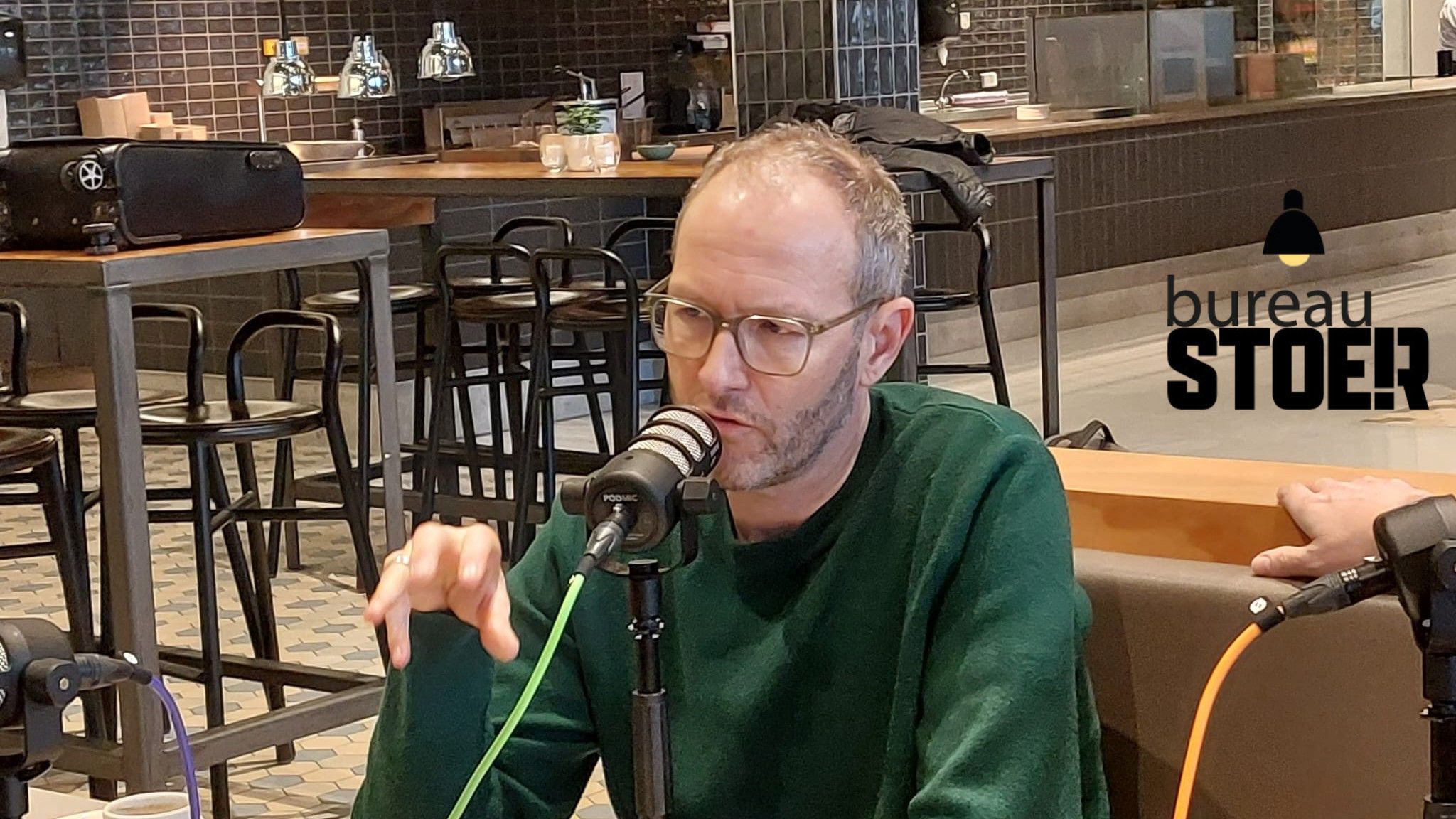
Rather than building ten entirely new cities on greenfield sites, the Netherlands should create them within the cities that already exist. That is the message architect Reimar von Meding wants to deliver to Rob Jetten, as well as to D66, Christian Democratic Appeal and People’s Party for Freedom and Democracy. His argument is straightforward: urban densification is realistic, can be delivered roughly twice as fast as greenfield construction, and is significantly cheaper for society.
Von Meding is managing director of KAW Architecten, one of the largest architectural practices in the Netherlands. Since 2012 he has described himself as an “action-tect,” regularly publishing studies aimed at challenging what he calls persistent misconceptions about building within existing cities.
In a letter to Jetten, Von Meding responds to the proposal to develop ten entirely new cities across the Netherlands. While the plan has gained political traction, the architect proposes a different approach. “The space for new cities is precisely where you least expect it: inside the cities that already exist,” he writes. “And it is entirely realistic that we start using that space.”
In his letter, Von Meding highlights the potential of ten underused spaces within existing buildings and urban areas. Together, these overlooked opportunities could accommodate hundreds of thousands of additional homes. Examples include converting unused garage boxes, transforming neglected and poorly lit corners of cities that often attract deterioration, and splitting large corner houses into multiple units.
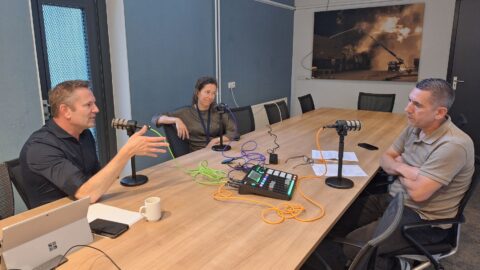
The widely held perception that building outside cities is faster and more sustainable is, according to the German-born architect, simply incorrect. A recent study titled Ruimte voor de sloot (“Space for the ditch”) even suggests that densification can improve the water-retention capacity of cities. Building within the city, he argues, is also faster than many assume. “Almost twice as fast, in fact,” Von Meding says in an interview about his letter to Jetten in the latest episode of the Bureau Stoer podcast. “Although inner-city development still requires around ten years of preparation.”
Only 0.3 percent
In recent years, interest in strategies such as rooftop extensions, splitting homes and inner-city development has grown rapidly. Yet actual implementation remains extremely limited, according to Von Meding. “I estimate that only about 0.3 percent of the potential is currently being realised,” he says. “The main reason? Lack of expertise.”
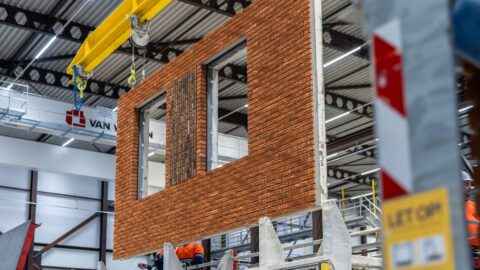
Another challenge is financial viability. Inner-city development is rarely highly profitable, Von Meding acknowledges. For that reason, he calls for support from the national government and the creation of a national densification strategy. From a technical perspective, he sees no major barriers. Instead, he challenges market parties to invest in factories capable of producing prefabricated 2D building elements, which could make it easier and more efficient to adapt existing buildings and urban areas. Projects already moving in that direction include a new production facility being developed by Van der Hulst Bouwbedrijf in Lisse.
According to Von Meding, it is a myth that building within existing cities cannot be economically viable. His own firm offers proof of the opposite. “KAW celebrates its 50th anniversary this year. We are one of the largest architectural firms in the Netherlands, yet we have never built on greenfield sites,” he says. “And we’ve been successful doing so. That shows it can be done.”
A million letters
He points to projects such as a redevelopment in Vlaardingen as an example. “That neighbourhood currently consists of 700 housing units owned by a housing corporation. Soon there will be 1,000. That’s a 30 percent increase and the public space will also improve.”
With coalition negotiations underway between D66, VVD and CDA, Von Meding hopes his letter will contribute to finding solutions to the housing shortage. He realises, however, that he is not the only one reaching out to politicians during this period. “I imagine Jetten receives a million letters,” he jokes in the Bureau Stoer podcast. “One for every home that still needs to be built. But I assume my letter will get some attention. It has to. Densification needs to become mainstream.”
During the podcast conversation, Von Meding is also asked whether he would be interested in becoming the next national government architect. The position will become vacant later this year when the term of the current Rijksbouwmeester, Francesco Veenstra, comes to an end. The director of KAW says he has been asked in the past to take on similar roles, but doubts whether he would be suited to the position. “I’m probably not political enough for that office,” he says. “I’m not really a political animal.”
The mission of an “action-tect”
Von Meding has been advocating densification for many years. In his view, it offers answers to several of today’s societal challenges, from housing shortages to climate adaptation.
Although KAW Architecten celebrates its 50th anniversary this year and has developed a successful portfolio, the practice has never built outside the city. “That alone shows that it is realistic,” says the architect, who jokingly described himself as an “action-tect” as early as 2012.
“Why? Because I quickly realised that architecture often focuses too narrowly on aesthetics,” he explains. “Architects can have a real impact on societal issues. I believe we have a responsibility to use that influence. We should not only ensure that people today have good homes, but that we build them in a way that will still make sense 100 years from now — and that the world remains a good place to live.”
Curious to hear the full story behind Reimar von Meding’s letter to Rob Jetten? Listen to the latest episode of the Bureau Stoer podcast.