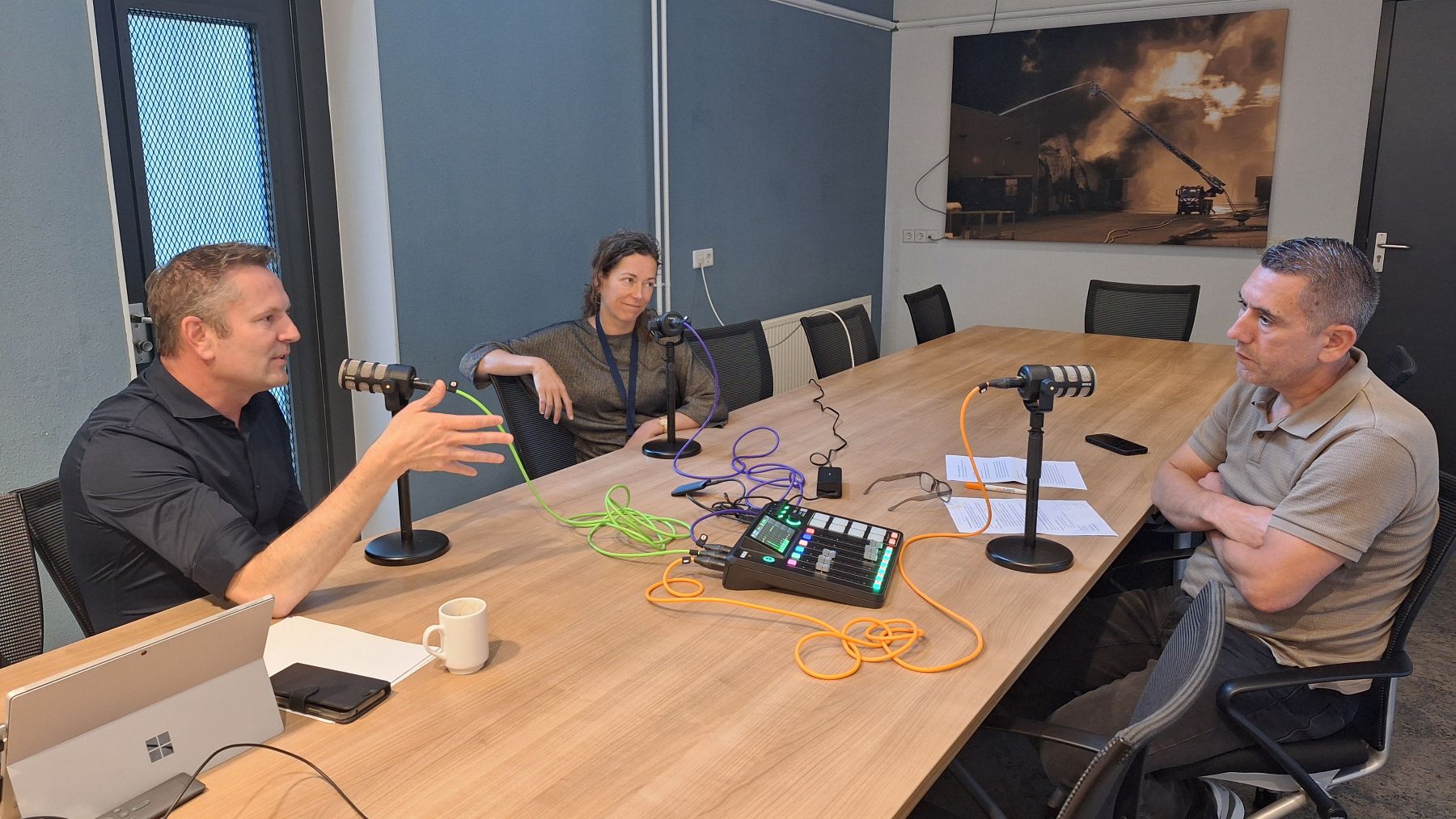
Why are fire safety regulations under fire? What does this mean for timber construction projects, and what is needed to put out this particular ‘fire’? These are the questions explored in the latest episode of the Bureau Stoer podcast.
“Should we stop building with timber? Absolutely not,” says Saskia Hegeman, Business Developer at consultancy Nieman, responding to TNO’s recent report on ‘outdated’ fire safety regulations in the latest episode of the Bureau Stoer podcast. Sitting alongside her is Lieuwe de Witte, Professor of Fire Safety Engineering.
One is the granddaughter of a fire brigade commander, while the other entered the profession more or less by chance. De Witte is affiliated with the Netherlands Institute for Public Safety (NIPV).
The two first met in the aftermath of the tragic fire at a detention centre near Schiphol Airport in 2005, in which 11 detainees without legal residency status lost their lives. On behalf of the Government Buildings Agency, they subsequently worked together to improve fire safety in detention facilities across the Netherlands. Although this seemed a noble objective, De Witte now reflects that the measures may, in some cases, have gone too far. “Not all of the facilities were actually unsafe.”
What is acceptable?
Putting out fire, or rather political fires, has become characteristic of fire safety policy in the Netherlands, according to De Witte. He argues that the entire system requires a fundamental review. In particular, he believes legislation lacks a clear description of the level of risk society is willing to accept.
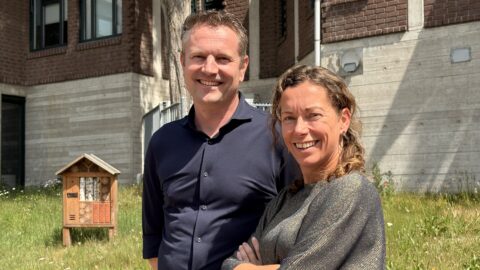
Brandveiligheidsexperts Saskia Hegeman and Lieuwe de Witte voor het gebouw van het NIPV. Foto: Thomas van Belzen
De Witte explains: “The regulations are based on two primary objectives: preventing fire from spreading to neighbouring buildings on adjacent plots and limiting the number of casualties. However, we tend to avoid the question of what level of risk we actually consider acceptable.”
“Why are the regulations outdated? The way we build and live is changing rapidly. The energy transition, sustainability measures and many other developments all have an impact on safety. It is right that major societal challenges take priority, but fire safety must not be overlooked.”
Turkey
Hegeman adds: “Fire safety has become a bit like the turkey at Christmas dinner. People would rather not invite it because it makes everything more complicated, when in reality it should be integrated into the design process from day one.”
The two experts are responding to a report published by TNO last week. The research institute argues that existing fire safety regulations are outdated and no longer align with modern construction methods and materials, such as timber. De Witte says: “Unlike concrete, timber contributes to the fire. We move from a fire inside a building to a building that is on fire. That is a fundamentally different situation.”
Too fire safe?
According to both experts, the time has come to update the regulations and create greater clarity. The current uncertainty often leads to confusion during the planning phase, and developers of timber construction projects are increasingly reverting to concrete structures.
“A real shame,” says Hegeman, “and entirely unnecessary.”
The pair propose several possible solutions. One suggestion is to introduce joint liability for the fire safety performance of a building. In their view, banning materials is not the answer. “At most, you might consider requiring specific safety measures in higher-risk buildings…”
Curious to hear the full discussion? Listen to Bureau Stoer Episode 34: “Biobased Builders Beware: Fire Safety Regulations Under Fire”.

This article was published by Bouw en Installatie Hub. Would you like to stay up to date with the latest news from the construction and building services sectors? Then visit the Hub and sign up for the online community.
↗