An office building without climate installations will soon be built in Amsterdam. For many building experts, the idea sounds almost unbelievable. But Oresti Sarafopoulos, architect and partner at OZ Architects, describes it as a remarkably simple concept. “This is common-sense knowledge,” he says. “We are not jokers.”
In a previous conversation you said you sometimes feel like taking a chainsaw to building regulations. What did you mean by that?
“To achieve our goals, architects, builders, consultants and developers spend a lot of time navigating around regulations.”
That doesn’t sound particularly enjoyable.
“It’s part of the job.”
You are about to submit a permit application for a very unusual office building in Amsterdam. Is it low-installation or installation-free?
“It is a building without climate installations. It stores a significant amount of CO₂ and the construction cost is comparable to that of a conventional office building.”
How did this idea originate?
“You have to go back a few years. One summer our own climate installation malfunctioned. Outside temperatures were around 32°C, yet inside the office it never got warmer than 16°C. That experience triggered our search.”
What problem does this concept solve?
“Building installations often need replacing after 10 or 20 years, while they represent a substantial part of the construction cost. On paper they may seem sustainable, but financially they are not. And that’s without even mentioning the CO₂ impact of buildings.”
So this is not just about cost?
“No. The real issue is that installations are often used as a form of symptom management in buildings.”
The building is called ONO. What does it look like?
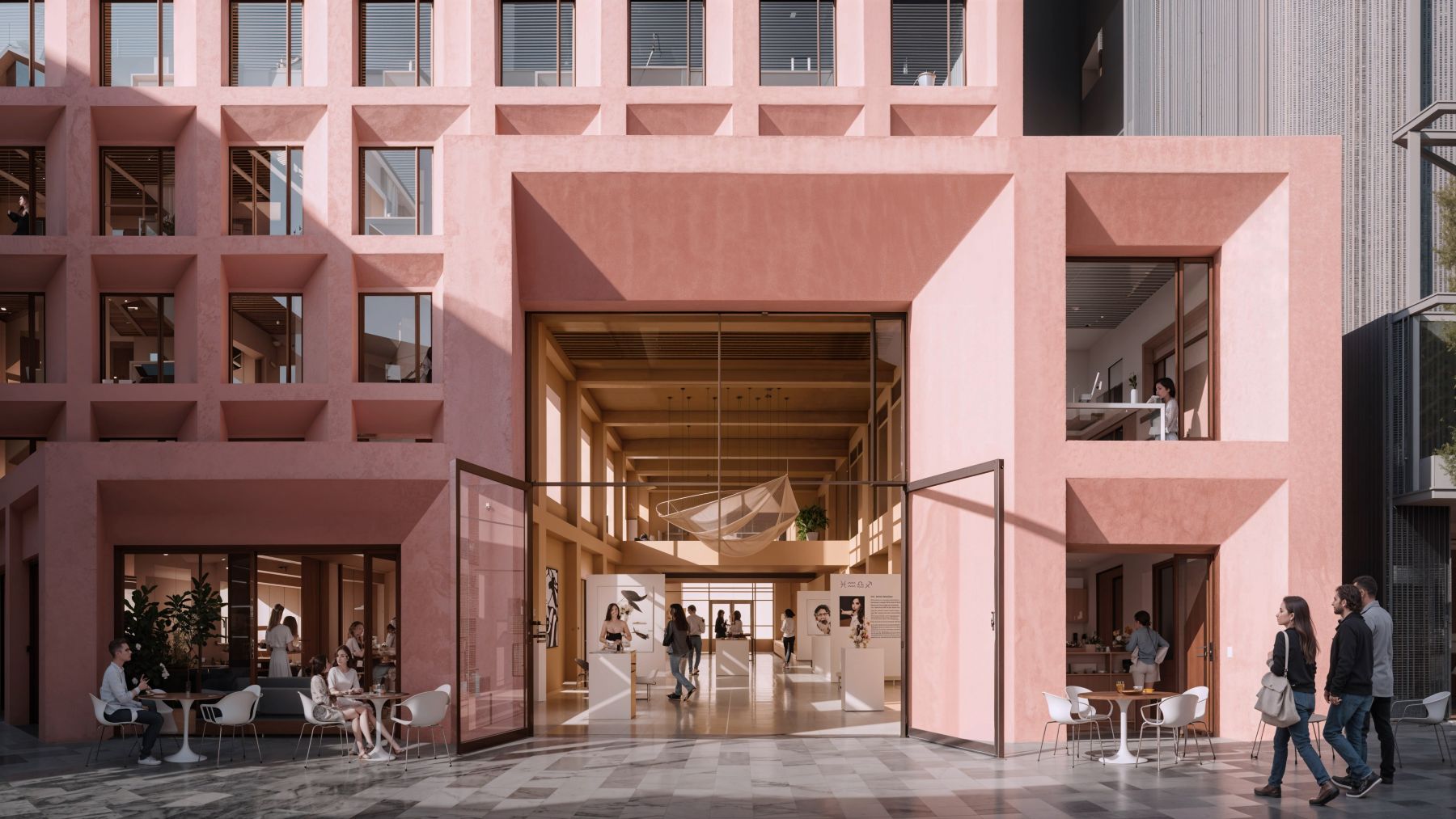
“Completely ordinary. The key idea is that the budget normally spent on installations is invested in architectural quality: space. The floor-to-ceiling height is four metres, and the glazing percentage has been drastically reduced, while daylight levels remain almost the same. Many people ask how the building can still be so bright. The answer is simple: high floors and tall windows allow daylight to penetrate deep into the interior.”
And that’s enough?
“Yes. In essence, that’s the story. And with that approach, you simply don’t need a climate installation. There is high-tech in the building, but it is entirely bio-based.”
So there is no heating system either?
“No, it’s not necessary. We applied the knowledge and innovation of an Austrian design method known as 22–26. In other words, the building temperature naturally fluctuates between 22 and 26 degrees Celsius.”
Does that require extremely thick walls for heat accumulation?
“Welcome to the new century.”
Doesn’t that mean a lot more material?
“In terms of surface area, yes. But in terms of weight, it is actually lighter than a ‘normal’ building. As mentioned, we use bio-based materials. The structure is made entirely of solid timber and insulated with hemp-lime. The construction is also inherently fire-safe, without requiring additional layers such as gypsum boards, extensive joinery, or even a sprinkler system. Again, it is a very simple building.”
And it meets all technical requirements?
“Absolutely. We developed the concept together with Aveco de Bondt and had the design fully calculated twice. It may sound like rocket science, but it isn’t. We are not jokers. Our concept is based on science and previous experience. In short, it is common-sense knowledge.”
Installation-free construction challenges many existing building regulations. Do you expect resistance?
“No. I actually expect enthusiasm. There are enormous innovations happening in the construction industry, and more designers want to reduce the CO₂ footprint of buildings. We are simply putting that ambition into practice.”
When will construction begin?
“The goal is to start in the third quarter. Completion is planned for the end of 2027.”
And why is the building pink?
“Because there are too few pink buildings,” he laughs. “We wanted to make a statement. The façade will be rendered—not smooth, but slightly rough. It takes inspiration from the work of Mexican architect Barragán. His architecture referenced antiquity; our reference points are historic canal houses, old town halls, thatched buildings and traditional timber-frame houses.”
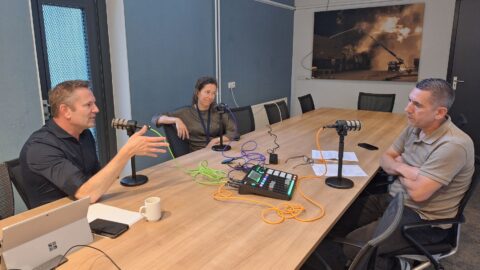
This article is based on an extended interview with designer Oresti Sarafopoulos. To hear the full story behind the installation-free office building, listen to episode 16 of the Bureau Stoer podcast.